Introduction: What Counts as a Resource?
We usually say “resources” and mean oil, coal, or wheat. But the truth is broader, deeper, and harder to ignore. A resource is anything our survival and continuity depend on.
That means soil and water. Minerals and forests. Energy and infrastructure. Knowledge, skills, and care. Even time itself. These are not luxuries; they are the foundations that sustain us and enable us to build futures.
And yet each of them has been transformed into a zone of extraction, ownership, or speculation. We regard soil as a commodity until it fails. We see water as bottled property while aquifers dry up. We treat minerals as loot to be seized by whoever arrives first. We construct infrastructure, then let it decay because repair isn’t profitable. We consider human knowledge and care as disposable, undervalued, or locked behind patents.
The system labels this as growth. In truth, it is theft.
If governance is coordination without rule, then resource governance must be stewardship without ownership as supremacy. The question is not “who owns it?” but “who is responsible for it?” In the context of civilisation's rule, perhaps the focus should be on stewardship rather than ownership, emphasising responsibility over authority. The key is the domain concept, where responsibility defines the scope of governance.
The Seven Principles of Resource Governance
-
Human Resources | The Principle of Value Beyond Profit
Knowledge, skill, care, culture, and imagination are not disposable commodities. They are the most vital resource we possess. Governance must elevate care and creativity alongside material production. -
Duties | The Principle of Responsibility
Rights only hold significance if accompanied by duties. Anyone interacting with shared resources has obligations: to protect, repair, and restore. Accountability forms the foundation of stewardship. -
Life-Support | The Principle of Thresholds
Soil, water, biodiversity, rainforests, oceans, critical minerals, and frontier technologies are not assets. They are thresholds. Cross them, and survival itself becomes at risk. These must be managed carefully, never privatised. -
Minerals and Energy | The Principle of Scarcity and Stewardship
The resources that sustain civilisation are finite and unevenly distributed. Stewardship involves conditional use: transparent, accountable, and always accompanied by restoration and never unlimited extraction. -
Infrastructure | The Principle of Shared Skeletons
Roads, grids, fibre networks, and digital backbones are not luxuries or assets to privatise. They are the skeleton of society, to be maintained transparently and shared as a commons. -
Transition Mechanisms | The Principle of Practical Tools
Stewardship is not an ideal but a practice. From material passports to reparative funds and open registries, governance requires mechanisms that make responsibility visible and enforceable. -
Temporal Resources | The Principle of Time Governance
Time is the resource that unites all others. Overwork drains individuals of life, while short-term exploitation deprives both present and future generations. Governance must plan beyond quarterly profits and four-year terms. Safeguarding rest, continuity, and the long-term future of civilisation.
I. Human Resources | The Principle of Value Beyond Profit
“Human resources” is one of the most dehumanising phrases ever coined. It reduces people to fuel, something to be consumed and replaced. Yet if we strip away the jargon, the truth is plain: knowledge, skill, care, and culture are the most essential resources we have. Without them, no mine is dug, no grid maintained, no soil restored. They are not secondary to minerals or machines and are the foundation on which everything else rests.
And yet we waste them. Care work, raising children, tending elders, and maintaining communities is dismissed as outside the “real economy.” In most countries, it remains unpaid or underpaid, even though without it, nothing else functions. The pandemic revealed this brutally: nurses, cleaners, and delivery drivers were called “essential” while treated as disposable.
Knowledge also suffers. Universities hide life-saving research behind paywalls. Corporations patent seeds, genes, and medicines, turning discoveries into monopolies. This is especially evident in agriculture. Monsanto built an empire not just by selling seeds but by making them legally inseparable from its chemicals, then patenting both. Farmers who tried to save seeds, a practice as old as farming itself, were sued into ruin. Entire communities became dependent on annual purchases enforced by law, not biology. What was once a shared, regenerative resource was turned into a system of artificial dependency and corporate rent.
https://www.youtube.com/watch?v=CxVXvFOPIyQ
Then there is time itself. Modern economies devour it. Overwork strips people of rest, imagination, and civic participation. The shorter the horizon with quarterly profits and populistic political cycles, the more human time is burned through as if it were endless. But time is finite. Burn it recklessly, and you don’t just waste lives, you erode the possibility of collective renewal.
Governance without rule must start by reversing this logic. Human resources are not commodities to be used. They are assets to be nurtured. That means recognising care as essential work. It means open knowledge as standard, not the exception. It means creating systems where rest, learning, and civic engagement are not luxuries but accepted as necessary for survival.

Human Resources Without Dehumanisation
This means not treating people like fuel. It means recognising that your skill, your care, and your time are as essential to survival as clean water or healthy soil and should be managed with the same seriousness.
Real-life example: The price of insulin
In 1921, insulin was discovered and quickly became a medical breakthrough that turned diabetes from a fatal disease into a manageable condition. Its inventors sold the patent for just $1, deliberately ensuring it would remain accessible to anyone who needed it.
A century later, insulin has become a symbol of pharmaceutical monopoly. In the United States, corporations patent minor tweaks to formulations and delivery systems, extending exclusivity long past the original discovery. Production costs are low. Estimates put them at under $10 per vial yet patients are charged hundreds of dollars. For many, this means rationing doses or going without, sometimes fatally.
This is not a story of scarcity. It is a story of knowledge turned into a monopoly, of a lifesaving discovery transformed into a profit machine. What was once offered to humanity as a shared resource has been fenced off, with lives left hanging on the price of entry.

II. Duties | The Principle of Responsibility
Rights without duties are empty. Even worse, they are dangerous. If you can claim ownership, profit, or access without responsibility, you can strip, pollute, and abandon without consequence. That is precisely how our current system functions: corporations seek rights, extract what they can, and then walk away as the damage accumulates.
Governance without rule requires the opposite. Every right is linked to a duty. If you participate in the commons, you owe care. If you damage it, you owe the repair. If you use it, you owe transparency. This is the only way to prevent shared resources from collapsing.
Take oil. When the Exxon Valdez spilt 11 million gallons of crude into Alaskan waters in 1989, ecosystems and fishing communities were devastated. Decades later, traces remain. Exxon fought liability in court for years, reducing settlements and avoiding full accountability. The damage was not merely an accident. It was a breach of duty: duty to prevent foreseeable harm and restore when harm was caused.
In truth, a company like Exxon would not exist in its current form. Oil is a vital, global resource essential for our survival. Its extraction would be managed as part of planetary stewardship, overseen through domain assemblies with strict ecological limits. Decisions about how much to extract, for what purposes, and under which safeguards would not be entrusted to private boards. They would be coordinated as matters of human survival, even down to which industry the oil is allocated to.
But since Exxon exists, it highlights the clear failure of today’s system. In a stewardship model, its license to operate would have included binding conditions: comprehensive ecological insurance, mandatory reparative funds held in advance, automatic suspension of activity in case of catastrophic damage, and transparent oversight by affected communities. The obligation to repair would not be disputed in courts but activated immediately, with restoration and accountability regarded as integral to extraction itself.
Duties are not vague ideals. They can be specific, concrete, and enforceable:
Duty of Care: Anyone extracting or managing resources must minimise harm, just as doctors swear to “not harm.”
Duty of Repair: If damage is done to soil, water, or communities, it must be restored, not written off as an external cost. No denial of the right to repair either.
Duty of Transparency: Hidden supply chains, secret ownership structures, and falsified reports are duty violations. If actions are not visible, they cannot be trusted.
Duty to Future Generations: Every decision interacts with the present and the long arc of survival. Short-term gains cannot justify long-term ruin.
Without duties, rights act as shields for exploitation. With duties, rights turn into responsibilities of stewardship. The balance is simple yet profound: you may act, but you are accountable for the consequences.
Explainer: Rights grant access. Duties impose responsibilities. When separated, rights become tools of control, shields for exploitation. When combined, they form stewardship: the freedom to act paired with the duty to care.
III. Life-Support | The Principle of Thresholds
Civilisation depends on a few fragile layers of life support: soil, water, biodiversity, rainforests, and oceans. These are not merely "resources” in the sense of things to be exploited. They are thresholds; crossing them endangers survival itself.
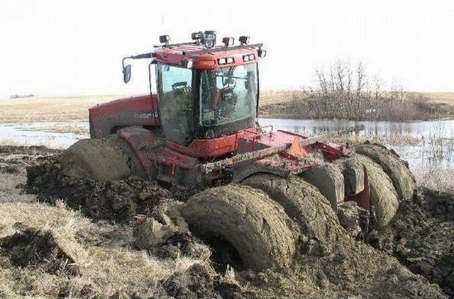
Consider soil. It seems like dirt is just something beneath us, vast and endless. But it isn’t. Fertile soil takes centuries to form, yet we are stripping it away within decades. A good comparison is that our soil is thinner than the skin of an apple. Of that skin, only 29% is land. Only a fraction of this land is fertile soil. Soil degradation is a major issue, with a 2022 United Nations report estimating that up to 40% of soils are already moderately or severely degraded, a figure that could rise to 90% by 2050 if harmful practices continue. Industrial farming, heavy machinery, pesticides, and monocultures compress and poison it until it finally collapses. The UN has warned that at current rates, all usable topsoil could be gone within sixty years. No soil, no food. No food, no society. That’s basic arithmetic. https://ourworldindata.org/soil-lifespans
Water is no different. Freshwater accounts for only about 2.5% of Earth’s water, much of which is locked in ice. Yet we treat aquifers as if they are bottomless vaults. In California, mega-farms extract groundwater so aggressively that the land literally sinks. Rivers like the Colorado are drained until they no longer reach the sea. And still, water is bottled, branded, and sold as private property. What happens when something as basic as survival depends on who can pay?
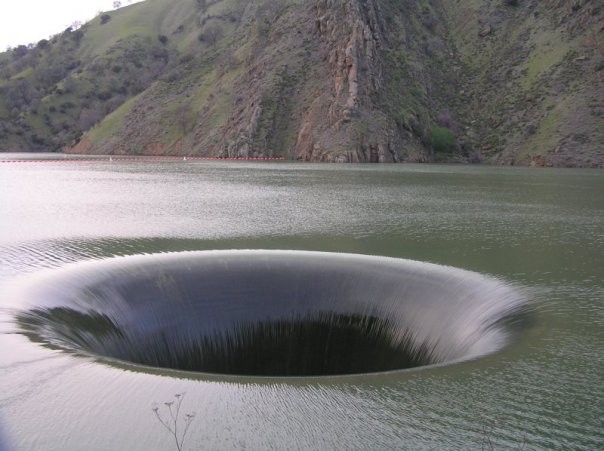
Rainforests and oceans are more than mere scenery. They regulate the climate, stabilise rainfall, and absorb carbon. When cut down or acidified, the feedback loops are harsh: droughts, floods, heatwaves, and species collapse. Political corruption and corporate pressure have maintained deforestation in Brazil despite global protests. Every hectare is a wound in the planetary lung.
And then there are the so-called “new commons”: critical minerals for the energy transition, large-scale computing for AI, biotechnology. These are often regarded as private treasures, but their misuse poses existential risks. Do we really want the ability to design pathogens, or to influence global decision-making through AI, confined to boardrooms and military laboratories? These are not toys. They are thresholds.
The principle here is straightforward: existential systems cannot be owned. They can only be stewarded. That means transparent charters, not perpetual property rights. That means revocable licences, not free-for-all extraction. That means accountability to the people who rely on them and not shareholders.
Why Soil Leads
If soil fails, food fails. If food fails, society fails. Civilisation depends on the fragile layer of earth we regard as dirt.
Real Life Example: The Colorado River
Seven US states rely on the Colorado River, but overuse and privatisation have depleted it so much that it now rarely reaches the sea. Farmers, cities, and corporations dispute over what remains. This poor planning proves that when vital resources are treated as private assets, collapse is inevitable.
IV. Minerals and Energy | The Principle of Scarcity and Stewardship
Minerals and energy are the foundations of modern civilisation. They create our tools, power our machines, transmit our signals, and illuminate our homes. Without them, modern life cannot function. However, they are limited, unevenly distributed, and often pose environmental risks during extraction. This means that those who control them possess commodities that give them power over societies.
Two-thirds of the world’s supply of Cobalt comes from the Democratic Republic of Congo, where child labour, deadly mines, and corrupt concessions are the norm. The minerals power our phones, laptops, and electric cars, yet the people at the source often remain in poverty. This is scarcity created by monopoly, corruption, and global indifference.
Or look at natural gas. For years, Russia’s ability to throttle its supply has given it geopolitical influence far beyond its economy’s size. Europe’s dependency was a vulnerability, a lever that could be pulled in conflict. For nation-states and companies, minerals and fuels have always been weapons as much as resources.

Even when conflict isn’t the trigger, the ecological cost is staggering. Rare earth mining in Inner Mongolia has created toxic lakes of radioactive sludge. Fracking pollutes aquifers in the United States. Oil spills in the Niger Delta have left entire regions poisoned for generations, with no substantial reparations. These aren’t isolated mistakes, but the inevitable result of a system where extraction ends once profit is achieved, and the damage is allowed to persist.
The alternative is not utopian; it is merely a matter of stewardship.
Mining and energy consumption must be considered a conditional licence, not a free-for-all concession. This entails transparent reporting of what is extracted and where it is allocated. It also involves mandatory reinvestment into ecological restoration and community repair. Additionally, automatic suspension should occur if damage exceeds agreed thresholds. Furthermore, it requires establishing scarcity ladders: ranking resources by toxicity and rarity so that the most dangerous or finite are never treated as commonplace trade goods.
Here’s the truth: the problem isn’t just that minerals are scarce. It’s that access is hoarded and damage is concealed. Governance without rule means bringing these materials into the open, where extraction, distribution, and waste are transparent, limits are respected, and responsibility doesn’t end when the mine is emptied.
Explainer: Scarcity Ladders versus Ownership
Not all resources are equal. Some are abundant and renewable, while others are rare and/or toxic. A stewardship ladder ranks them. Ensuring that the most fragile and hazardous are never considered commodities for speculation.
Real Life Example: Cobalt in Congo
Every smartphone in your pocket contains cobalt from mines where children dig with bare hands. Corporations dominate supply, governments tolerate exploitation, and communities bear the cost. Scarcity without proper care always results in violence somewhere.
V. Infrastructure — The Principle of Shared Progress
Infrastructure is the framework of society. Roads, ports, power grids, and fibre networks are not luxuries or ceremonial trophies. They are the vital channels that sustain modern civilization. When they are neglected, privatised, or captured, communities weaken. When they are shared and maintained, societies flourish.

But too often, infrastructure is regarded merely as a backdrop. Governments construct glamorous new airports while old bridges decay. Cities lay tram lines for show, even as water pipes beneath them leak. When funds are limited, the immediate response is not to repair but to privatise. Privatization has become the holy grail for any failing policy. The absurdity of this logic is at its worst in the health sector, but privatising any critical infrastructure is moronic at best. Private investors get a short term profit while the public bears the long-term consequences.
The same principle applies to digital infrastructure. The internet is no longer a luxury; it is the central nervous system of civilisation. However, in many countries, entire regions have patchy service because it is not profitable to connect them. In others, monopolies control satellites, cables and servers, setting access and prices. To dominate the internet means simultaneously controlling communication, culture, and commerce. A chokehold on humankind.
Real-world examples are plentiful. In the United States, toll roads built under private contracts often charge such high fees that they remain largely empty, while public roads become congested with traffic. In the United Kingdom, the rail network was privatised in the 1990s amid promises of greater efficiency. Yet ticket prices increased dramatically, and reliability declined, resulting in passengers facing higher costs and poorer service. Similarly, in many parts of Africa, undersea data cables are controlled by a few foreign companies, leaving entire nations dependent on infrastructure they neither own nor fully control.
Stewardship governance treats infrastructure differently. Roads, grids, and networks are recognised as commons. Their maintenance is transparent. Their access is universal. Their ownership is collective and not concentrated. Digital backbones are treated no differently than water pipes: nobody should have their survival or participation in society gated by a monopoly.
Free Public Transport as a Real-World Example
Several cities and even countries have started prioritising public transport as a public service rather than viewing it solely as a market. Here are compelling cases:
Belgrade, Serbia (Population ~1.7 million): On 1 January 2025, Belgrade made all buses, trams, and trolleybuses free for residents. It became the largest European city to do so. EU Urban Mobility Observatory
Montpellier, France (Population ~510,000): Beginning 21 December 2023, the city eliminated fares to tackle the climate crisis and ease living costs. Ridership rose by a third, from 84 million trips in 2019 to 110 million the following year. euronews
Luxembourg (countrywide): In February 2020, Luxembourg became the first country to make all public transport—buses, trams, and trains—free. Frommer's
VI. Transition Mechanisms The Principle of Practical Tools
Stewardship is more than just an abstract concept. It is a tangible practice. To shift from ownership to responsibility, from extraction to care, we need mechanisms that translate principles into daily actions. These tools make accountability clear, measurable, and enforceable. Without them, good intentions are only empty slogans.
First of all, let me be clear: I am not against ownership. People should be able to own their homes, tools, gardens, and the land they work with their own hands. Ownership matters; on a human level, it provides stability, dignity, and independence.
My opposition lies in confusing ownership with an unlimited license and believing that because something is “yours,” it bears no broader responsibilities. At a certain scale, what we call “property” ceases to be private and becomes vital to life itself. A river supporting millions, a forest stabilising a region’s climate, or the digital networks that carry our voices are too essential for our survival to be treated as if they were merely private resources.

This is where stewardship begins. Stewardship is not just an abstract ideal but a lived practice: the daily work of caring for what we hold in common, ensuring that use does not become abuse and that extraction does not destroy the very foundations of life. The transition from ownership to responsibility, from exploitation to care, requires mechanisms that turn values into action. Tools such as material passports, collective oversight, and scale thresholds are not designed to burden the people practicing their trade. They aim to make accountability visible, measurable, and enforceable where it matters most: in the large systems and resources such as water, energy, minerals, and land, on everything that entire societies depend on.
Material Passports
Every significant product carries a passport: a record of what it contains, how it was manufactured, and where it should be disposed of at the end of its life. Toxicity, repairability, and recyclability shall all be transparent. Without a passport, there is no market access. This makes the invisible visible, forcing producers to account for their footprints.
A material passport is not meant to burden the farmer selling cheese at the farm shop or the craftsperson making tools for their own community. Local production, tied to place and people, should be encouraged and not be strangled by paperwork. A lot of the rules and regulations we have today are good and necessary, but it will never be complete or event truly function unless addressed from a global survival perspective.
The thresholds here are scale and impact. Mass production, pharmaceuticals, electronics, industrial farming and anything operating at the level of global markets falls under strict passport scrutiny. Local produce and short supply chains remain subject to basic standards of cleanliness, safety, and animal welfare, but are not dragged into the machinery of global regulation.
The principle is proportionality: the greater the scale, the tighter the responsibility. Stewardship targets the industries that profit from opacity and complexity, not the small producer working within their community.
Reparative Funds
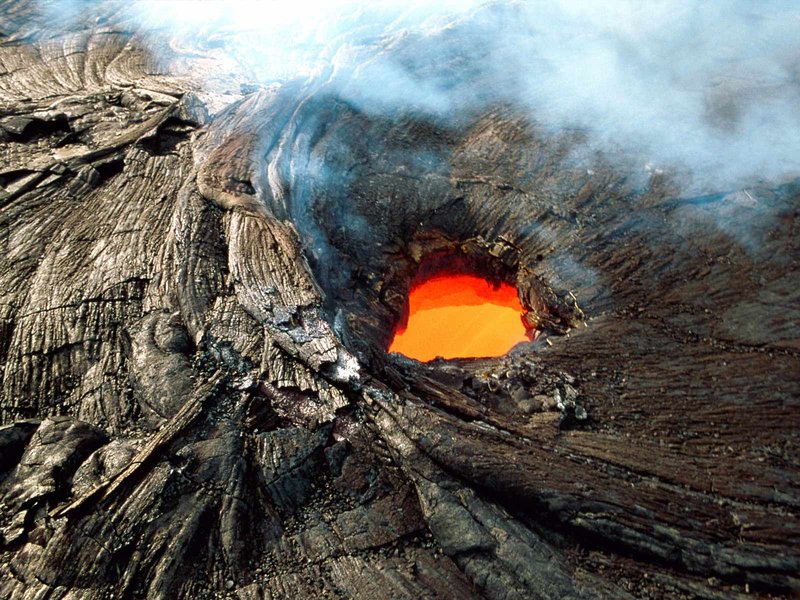
Extraction is never neutral. Every barrel of oil, hectare of forest, and ton of ore extracted from the ground incurs a cost to air, water, species, and communities. Those costs have been externalised for centuries, absorbed by the atmosphere, rivers, Indigenous peoples, and future generations. Those who profited most from fossil fuels, deforestation, or mineral monopolies owe a debt. Reparative funds make that debt explicit. They establish mandatory pools into which a share of extractive profits is paid, not as charity but as direct restitution. These funds are then allocated to restoring ecosystems, repairing damage, supporting displaced or exploited communities, and financing the shift to regenerative alternatives. Repair is not charity. Repair is an obligation.
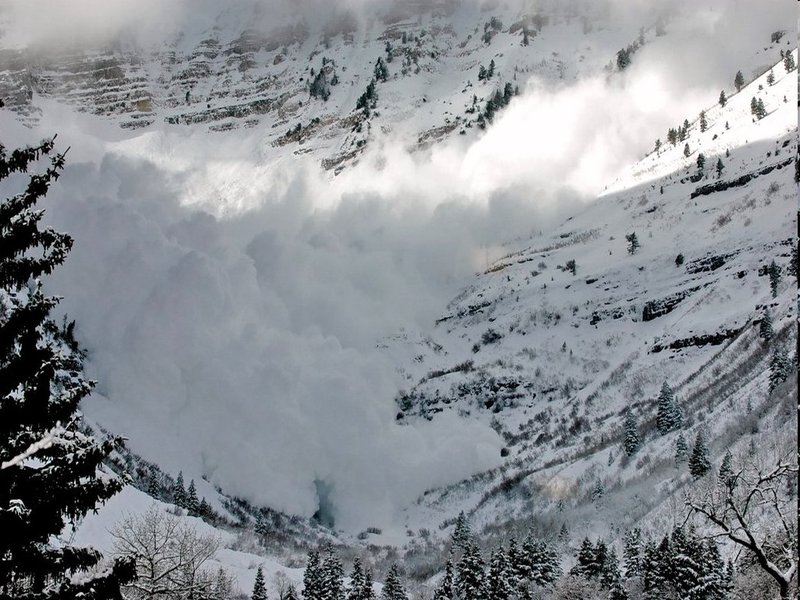
The obligation must be proportionate, though. Stewardship recognises that responsibility grows with scale and systemic impact. A farmer is not squeezed under the same scrutiny as a supermarket’s potential contribution to the waste of food. It is the multinational oil company that extracts billions in profit while leaving rivers poisoned, or the agribusiness clearing rainforests for soy monocultures that must return a portion of their winnings to heal the ground they have depleted.
Domain Assemblies
National borders do not contain water, soils, minerals, or digital infrastructure. Rivers cross borders, winds carry pollution, and data flows without passports. Governance must match the reality of what is being stewarded. A single valley can be cared for by local inhabitants. An aquifer that spans nations or a fibre-optic backbone linking continents requires a different kind of oversight.
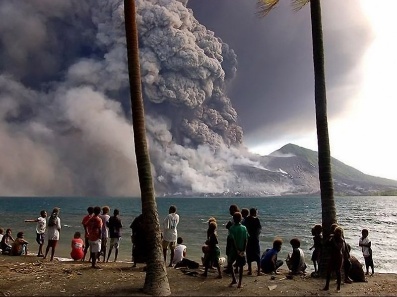
Domain assemblies are forms of governance. They are not distant regulators imposed from above, but federated councils comprised of those affected: communities upstream and downstream of a river, workers and residents in mining regions, scientists who can trace impacts, and representatives of the broader global commons. Their role is to set conditions for use, monitor compliance, and revoke licences when obligations are broken. The assemblies sit at the seam between the local and the planetary.
The global registry and governance framework would coordinate these assemblies and hold the shared record of what exists, who uses it, and what obligations come with that use. The registry is the memory of the commons; the assemblies are its voice. Together they form a feedback loop: the registry makes extraction visible, the assemblies decide on limits and reparations, and both remain open to scrutiny and revision. In this way, stewardship becomes a living practice: not a slogan, not a vague moral appeal, but a set of institutions designed to keep Earth's life-support systems in common trust.
Global Commons Registry and governance body
The Global Commons Registry is the foundation of accountability. It is a public, open ledger that records who is extracting, under what conditions, and with what impact. Every major concession, licence, or permit related to critical commons is logged here, visible to governments, companies, and the communities affected. Transparency becomes the minimum standard of care. There is no hidden ownership, no anonymous shell companies stripping forests, and no invisible pipelines or satellites claimed by nobody yet affecting everyone’s lives.
The registry does not operate in isolation. It functions as the transparent, neutral database connecting all domain assemblies. It is a platform for shared facts. Each assembly is a cross-border council of affected communities, workers, scientists, and public representatives, empowered to interpret the data, set thresholds, and revoke licenses when obligations are broken. The registry provides the record; the assemblies deliver the judgment and enforcement.
Only in rare cases, such as interplanetary matters or when domains reach a deadlock, does a global assembly intervene, not to rule but to restore coordination. In this way, stewardship becomes tangible and every topic becomes transparent. Rules, tools, and institutions weave the local and the global into one continuous fabric of care.
Real-world examples already exist. The European Union is developing “digital product passports” to track the environmental impact of goods throughout their supply chains. Norway’s sovereign wealth fund excludes companies that benefit from deforestation or human rights violations, turning private profit into collective accountability. Even the often-criticised Kimberley Process, aimed at stopping the sale of conflict diamonds, demonstrated that international oversight of a global commodity trade is achievable, though imperfectly. A Global Commons Registry builds on these efforts to shed light and establish enforceable accountability for activities that, due to their scale and/or impact, have consequences that no single actor should bear.
These examples are not models to copy, but lessons in both possibility and limitation. A genuine Global Registry and Governance Body would learn from its shortcomings. It would be designed to resist capture, to ground its standards in ecological science rather than shifting political fashion, and to apply obligations proportionally. The aim is not to bury local farmers, fishers, or community energy cooperatives in bureaucracy; their proximity and embeddedness already bind them to their landscapes. Instead, the registry targets activities whose scale or systemic importance places them beyond the rightful scope of private or national ownership. Like the oil fields that destabilise the climate, the rivers that cross borders, the minerals that feed entire industries. At that level, responsibility must be collective, transparent, and enforceable.
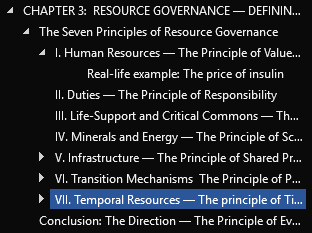
You are here:
VII. Temporal Resources | The principle of Time Governance
Time is the resource that binds all others. Soil needs time to recover, water tables need time to recharge, and children need time to grow. Systems that only count what fits in a quarter or an election cycle eat their future. Exhaustion is not productivity. Speed is not progress. When we treat time as expendable, we convert living capacity into short bursts of output, then act surprised when burnout, ecological collapse, and brittle infrastructure follow.
A governance model that refuses rule must also refuse short-termism. It must defend three horizons at once:
The daily horizon: rest, care, learning, and civic participation as non-negotiable components of a functioning society.
The generational horizon: policies that hold or improve conditions for those who come after us.
The civilisational horizon: continuity of the foundations we cannot rebuild quickly once lost, such as fertile soil, old forests, oceans that still buffer heat, and knowledge held in public trust.
This is not romantic. It is logistics. Overwork drains decision quality and communal life. Deferred maintenance turns infrastructure into a time bomb. Extractive finance that demands constant growth strips buffers and removes slack from systems until a slight shock becomes a crisis. A future-oriented practice reintroduces slack on purpose. Slack is not waste. Slack is resilience.

Tools that turn time into policy
Rest Floors: Legal and cultural guarantees for rest, akin to a minimum wage for time. This includes the right to disconnect, predictable scheduling, sabbaticals across professions, and protected caregiving time. Durable participation cannot exist if people are permanently exhausted.
Maintenance Covenants: A fixed percentage of every infrastructure and ecological budget is reserved for maintenance and repair before new projects begin. No ribbon cutting without repair. This prevents the glamour of “new” from cannibalising the duty to sustain what already carries us.
Long-Horizon Accounting: Replace discounting methods that treat the future as negligible. Public projects must pass generational stress tests that model impacts at 5, 15, and 50 years. Decisions that look efficient only because they push costs forward fail by design.
Sunset and Sunrise Clauses: Major policies and concessions expire unless re-earned. There must also be sunrise requirements for essential transitions: when we phase out a harmful practice, a replacement timeline is triggered with milestones that cannot be skipped.
Regeneration Periods: Mandatory recovery windows for ecosystems under pressure. Fishing zones, forests, and soils are given formal off-seasons or multi-year rests based on ecological thresholds, not political convenience.
Continuity Funds: Reparative funds are earmarked for fixing harm and preserving knowledge and skills over time. Apprenticeships, open repositories, and community labs keep capacities alive between boom and bust cycles.
Time Transparency: Institutions track and publish “time ledgers” alongside financial ledgers. How much human time did this policy save or steal? How much regeneration time did it grant or deny to land and water? If time is invisible, it will be consumed.
What changes in practice
Work that sustains the future such as caregiving, teaching, maintenance, and restoration stops being treated as an afterthought and receives structural priority.
Budgets stabilise because prevention is cheaper than emergency response.
Participation widens because people have time to show up, not only opinions after the fact.
Ecological baselines stop sliding because regeneration periods are built into the law, not negotiated only after collapse.
Real-world analogy: You can overfish a bay and celebrate this year's record haul. The graphs will look brilliant until the stock crashes, and the boats have nothing to catch. Communities that enforced multi-year moratoriums and rotational harvests saw stocks recover and livelihoods return. The difference was not ideology. It was time.
Conclusion: The Direction | The Principle of Everyday Stewardship
Governance without rule will remain a slogan if resources stay captured, privatized, and wasted. To build a world beyond domination, we must start at the foundations: soil, water, minerals, infrastructure, and human care.
And this doesn’t mean some abstract “better stewardship.” It means practical, everyday shifts you can see and touch.
Right to repair: If you can’t fix your own tractor because John Deere locks the software, that’s not governance, it’s capture. If your coffee machine is designed to fail so you buy another, that’s not innovation, it’s theft of resources. If your car requires corporate permission to be repaired, that’s domination dressed up as service. A real governance system would guarantee the right to repair, keeping resources in circulation instead of dumping them into landfills.
Creating resources, not just consuming them: Every rooftop without a solar panel is wasted potential. Governance should make resource creation, the generation of clean energy, the rebuilding of soil, the restoration of ecosystems, the easiest and most encouraged path. Not charity. Not idealism. Just basic survival logic.
Shared ownership of what we build together: When a company’s value comes from the people working in it, why should ownership be concentrated in a boardroom detached from the work? Imagine if resources stayed in circulation at the human level: if employees owned the company as long as they worked there, the resource - the company itself - would remain tied to those who sustain it, not siphoned off as perpetual rent.
These aren’t fantasies; they are ongoing struggles. Farmers versus software giants. Citizens calling for energy independence. Workers organising for cooperative control. Each one reflects the same core idea:
No one owns the future. We all share responsibility for it. And responsibility is not a weakness. It’s the only mature way to live on a limited planet.
A law can be amended through a vote. A charter is a line you do not cross. It’s not just policy—it’s a boundary for civilisation itself.
The Kardemomme Law
From a Norwegian children’s story comes a deceptively simple rule:
“You shall not bother others, you shall be kind and gentle, and otherwise you may do as you please.”
It isn’t a constitution. It isn’t enforceable code. But it captures something essential: boundaries, empathy, and freedom. The same three pillars that underpin resource governance.